Smartphones today are incredible video tools, and models like the iPhone 15, 16, 17, Samsung Galaxy series, and Google Pixel phones are capable of stunning performance. But even the best 4K or 8K footage falls flat if the audio sounds distant, noisy, or unclear. That’s why a good wireless microphone has become one of the most important accessories for content creators, podcasters, YouTubers, TikTokers, journalists, wedding videographers, and business teams.
This comprehensive guide is designed to help you choose the best wireless microphone for any recent iPhone and Android device. It covers everything from connectivity differences, must-have features, recommended models, real-world use cases, and setup tips. Whether you’re filming travel vlogs, live streaming, doing street interviews, or recording educational content — choosing the right mic can transform your production quality overnight.
Why You Need a Wireless Microphone for Mobile Filmmaking
Audio recorded directly from a smartphone’s built-in mic is usually:
Too far from the speaker’s mouth
Overrun by background noise
Hollow or echo-filled in open or indoor environments
Inconsistent in volume when people move around
A wireless microphone solves all of these problems instantly. A small mic placed near the speaker captures rich, direct voice sound. A transmitter sends the clean signal to a receiver plugged into the phone — no messy cables needed.
The result? Professional-sounding audio where your voice is warm, clear, and present — even if you’re several meters away from the camera. If video quality is 50% visuals and 50% audio, then upgrading sound is the quickest pro-level improvement you can make.
Compatibility: iPhone USB-C vs Lightning vs Android
When you’re searching for the right mic, compatibility is the very first thing to understand. The iPhone lineup has recently shifted from Lightning connectors to USB-C, bringing Apple into the same port ecosystem as Android phones.
Here’s what that means:
iPhone 15, 16, 17 → USB-C connection
Older iPhones (14 and below) → Lightning connection
Android smartphones → Mostly USB-C
Because of this shift, many wireless microphones now come with a compact receiver that plugs directly into the phone’s charging port via USB-C. Some kits include both USB-C and Lightning adapters, and many also support 3.5mm audio if you have the right adapter.
If you’re buying for an iPhone 15 or newer, USB-C receivers are the safest and cleanest solution. If you still own a Lightning phone, choose a model offering a dedicated Lightning receiver or ensure you have a certified adapter.
How to Choose the Best Wireless Mic: Key Factors
Not all wireless microphones are equal. The right choice depends on your goals and shooting style. These are the top considerations when shopping:
1. Transmission Type: RF vs Bluetooth
Bluetooth mics are quick and cable-free, but often suffer from latency, range limitations, and compression. RF-based digital wireless systems (usually 2.4GHz) provide stronger stability, longer distance, and higher-quality audio.
2. Audio Quality
Check frequency response, clarity, and how well the mic handles wind, background noise, and loud environments. Built-in noise reduction features can be handy, but not all are created equal.
3. Range and Reliability
Creators often shoot outdoors, in crowded Wi-Fi locations, or with subjects in motion. Strong RF signal transmission ensures your sound doesn’t drop or distort.
4. Internal Recording on the Transmitter
Higher-end models can record audio directly on the transmitter as a backup. This safety function prevents audio loss if wireless connection drops — priceless during weddings, interviews, and one-time shoots.
5. Battery Life and Charging System
Look for at least 5–7 hours of runtime per charge. A charging case is extremely useful when shooting multiple sessions per day.
6. Lavalier Option
Many transmitters include built-in mics, but using a lavalier clipped closer to the source improves sound consistency and appearance.
7. Number of Microphones
If you film interviews or conversations, you’ll want a dual-transmitter kit. Solo creators may only need one.
8. Size and Visibility
Compact, lightweight transmitters are more comfortable and less distracting in frame.
Taking these points into account early will prevent frustration later, especially if you intend to grow your content creation over time.
The Best Wireless Microphones for iPhone 15/16/17 & Android in 2025
Below are the top wireless microphone systems available this year — chosen for reliability, sound quality, compatibility with USB-C smartphones, and real-world performance. Each caters to different budgets and filmmaking needs.
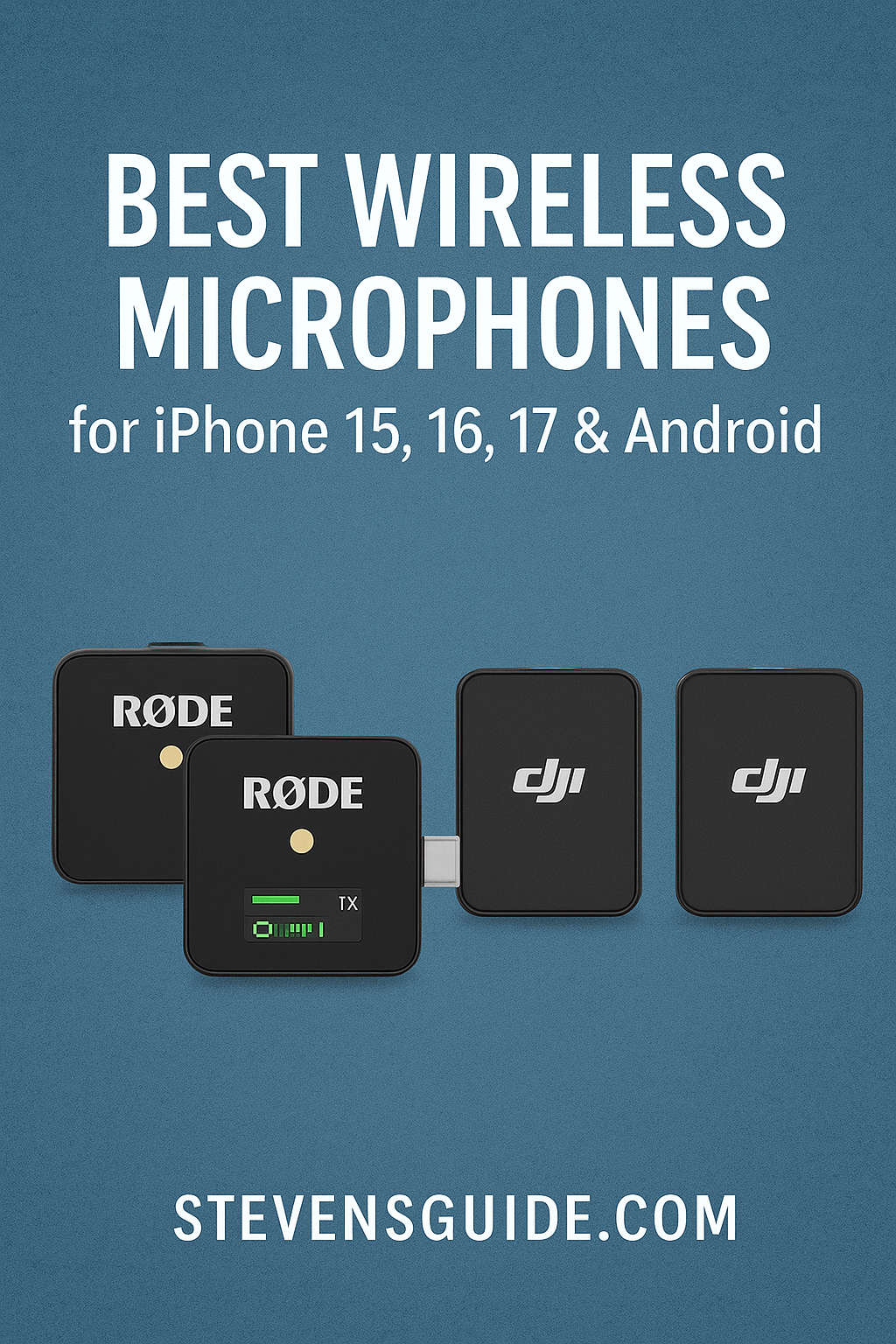
RØDE Wireless GO (Latest Generation) – Best All-Round Creator Mic
RØDE’s Wireless GO series is one of the most trusted names in mobile production. The newest generation continues the tradition with improved range, advanced app controls, safety audio backups, and seamless smartphone support.
Why creators love it:
Built-in microphones with excellent voice tone
Direct compatibility with USB-C mobile devices
Can record two people using a dual-TX kit
Optional lavaliers and magnet mounts for stealth placement
Rode Central app provides deep control and firmware upgrades
Who it’s ideal for: YouTubers, vloggers, interviewers, educators, and filmmakers who want a compact yet professional system. It balances price, performance, and usability better than most.
DJI Mic 2 – Best Professional Wireless Microphone for Smartphones
The DJI Mic 2 raises the bar for mobile audio with impressive stability, advanced noise canceling, and internal recording. If you work in unpredictable environments or shoot paid projects, this kit gives you peace of mind that your audio will not fail.
Why it stands out:
Internal storage in transmitters for backup recording (even if the wireless signal drops)
Long battery life and extended range suitable for outdoor shoots
High-quality microphones with detailed vocal clarity
App-based adjustments including gain control and filters
Elegant design with magnetic clip options
Who benefits most: Journalists, corporate teams, event videographers, and ambitious creators who can’t risk audio loss. It’s more premium in price, but worth every dollar for reliability alone.
DJI Mic Mini – Best Compact Lightweight System for Travelers
If you value portability, the DJI Mic Mini is an extremely small and lightweight version of the original DJI mic system. It focuses on convenience while still delivering impressive performance for run-and-gun creators.
Top highlights:
Tiny transmitters that nearly disappear on clothing
Outstanding battery life for all-day shooting
Easy setup and strong wireless performance
Great value for the performance offered
Best use cases: Travel content, street interviews, handheld vlogging, TikTok and Reels. If you don’t need onboard recording, this kit offers a perfect balance of cost and functionality.
Saramonic’s Blink series is an affordable wireless system that still delivers surprisingly clean audio. What makes the Pro X line shine is accessibility — multiple receiver versions exist for Lightning and USB-C phones, plus dual-transmitter options.
Why it’s worth considering:
Budget-friendly without excessive compromises
Compatible with both old Lightning and new USB-C iPhones
Charging case included with most kits
Easy control for beginners
Includes lav mics in many package bundles
Ideal audience: New creators, small businesses, or anyone who wants reliable performance at a friendly price. It’s a fantastic starter upgrade for smartphone audio.
Sennheiser is a legendary name in professional sound. The XSW-D system is designed for reliability under pressure — environments like news reporting, documentary filming, and corporate work where you must get the shot.
Why professionals trust it:
Renowned sound accuracy and consistency
Rugged design that holds up to outdoor and field use
Simple pair-and-go operation
Works with lavaliers and accessories from the Sennheiser ecosystem
Who should choose it: Reporters, wedding videographers, and production crews that want a tough wireless setup with superb voice sound. It’s slightly larger than ultra-compact systems, but its performance is rock-solid.
Insta360 Mic Air & Small Ecosystem-Focused Systems – Best for Budget Buyers
Brands like Insta360 and Maono offer very compact microphones designed primarily for mobile workflows at extremely accessible prices. While they may not match the pro-grade reliability of DJI or RØDE, they offer great value for casual creators.
Where they shine:
Ultra-lightweight transmitters
Very affordable pricing
Simple USB-C or Bluetooth connectivity
Good upgrade from built-in phone microphones
Best suited for: Beginners, hobbyists, TikTok creators, students, and anyone testing the waters of content creation.
Comparison Overview: Which One Fits You Best?
Here’s a quick simplified breakdown to help decide:
Best Overall for Most Creators → RØDE Wireless GO
Best Backup Recording & Pro Reliability → DJI Mic 2
Best Small and Travel-Friendly → DJI Mic Mini
Best on a Budget (Lightning + USB-C Options) → Saramonic Blink 500 Pro X
Best for Tough, Professional Reporting → Sennheiser XSW-D
Best Low-Cost Starter Option → Insta360 / Maono Compact Systems
Thinking about your filming environment is key: Are you outdoors? In noisy public places? Filming in teams? Or solo? A little planning ensures the gear you buy will serve you well for years.
Best Wireless Microphones for Specific Real-World Scenarios
Because every creator is different, here are quick recommendations tailored to the most common shooting needs:
For YouTube vlogging: RØDE Wireless GO or DJI Mic Mini For business or corporate content: DJI Mic 2 For TikTok / Instagram Reels: DJI Mic Mini for lightweight convenience For interviews with two speakers: Dual-transmitter RØDE or Saramonic kits For wedding and event videography: DJI Mic 2 internal backup recording For journalists and outdoor reporting: Sennheiser XSW-D For low-budget smartphone content: Saramonic Blink or Insta360 compact setups
These use-case-based picks help prevent overspending — or under-equipping for your situation.
Essential Setup Tips for iPhone and Android Users
Even the best mic can perform poorly if set up incorrectly. Follow these simple tips to get studio-quality audio from the start:
Keep the mic close to the voice source
Around six inches from the mouth is ideal — clipped to a collar or shirt edge.
Use included windshields outdoors
Wind noise can destroy audio fast. A furry windscreen (“deadcat”) is a must for outside content.
Set proper gain levels
Avoid distortion by keeping your loudest speaking levels under clipping. Many apps offer visual audio meters.
Secure your transmitter properly
Use magnet mounts or lav cables if you move a lot — minimizing clothing rubbing noise.
Update firmware in companion apps
Manufacturers regularly improve audio processing and connectivity features.
Test your full setup before filming important content
Nothing hurts more than discovering silent footage after a shoot.
These small steps produce a huge jump in audio consistency and polish.
Common Wireless Mic Problems and How to Fix Them
No sound on your phone: Check that your phone recognizes the receiver as an audio input. On Android, USB-C audio permissions may need enabling.
Static or dropouts: Maintain line of sight between transmitter and receiver whenever possible and avoid placing the phone near Wi-Fi routers.
Clothing rustle noise: Use a lavalier with a small windscreen and route cables under clothing.
Audio delay in livestreams: Direct RF receiver connection is best — Bluetooth introduces more latency.
Wind rumble outdoors: Always attach a proper fluffy windscreen.
Learning these quick fixes saves frustration when filming on location.
Why Wireless Mics with Internal Recording Are Worth Extra Cost
If you do paid work, interviews with guests, or one-take content — backup recording is a game-changer. When your transmitter stores audio locally, your footage remains usable even if:
The subject walks too far
Interference disrupts the signal
The battery dies on the receiver
The cable becomes loose
Systems like DJI Mic 2 protect against all those failures. For serious creators, it pays for itself the first time it saves a shoot.
Future-Proofing Your Investment
Technology keeps moving fast, especially as Apple and Android continue improving cameras, apps, and port standards. The best investment you can make is a wireless mic that:
Connects directly via USB-C
Supports firmware upgrades
Offers expanded accessories like lavaliers, smartphone clamps, and mounting clips
Has dual-microphone options as your channel count grows
While cheaper models get the job done, premium systems often support your career much longer — and retain value if resold.
Final Buying Advice
If you’re torn between several systems, consider this final checklist:
Do you film solo or with guests?
Indoors, outdoors, or both?
Are you okay with a slightly bigger investment for recording backup?
Do you already own lavaliers you want to use?
USB-C iPhone or older Lightning model?
Will the mic’s appearance in-frame matter for your brand?
Do you need all-day operation without recharging?
The more professional your goals, the more worth it becomes to invest in a system like the DJI Mic 2 or RØDE Wireless GO. If you’re starting out or working casually, the Blink or Insta360 options are perfectly solid.
Remember: upgrading your audio is one of the fastest ways to elevate your content, boost viewer engagement, and build trust with your audience.
Conclusion: Best Wireless Microphones for iPhone & Android in 2025
Your smartphone is already a powerhouse video camera. Pair it with the right wireless microphone and you unlock professional storytelling from your pocket. From TikTok creators to professional filmmakers, the right audio gear transforms every clip you capture — making it clearer, more polished, and much more enjoyable to watch.
For most creators today, a USB-C wireless mic system is the smartest and most future-proof upgrade. The top three recommendations remain:
• RØDE Wireless GO — Versatile and trusted by creators
• DJI Mic 2 — Pro-level audio with internal backup recording
• DJI Mic Mini — Best compact system for mobile shooters
Whatever your budget or experience level, there’s a wireless mic that will make your videos dramatically better — starting immediately.
Frequently Asked Questions (FAQ)
Do wireless microphones work with iPhone 15, 16, and 17 models?
Yes. Wireless microphones that use USB-C or come with Lightning-to-USB-C adapters will work with the latest iPhones. Make sure the mic specifically lists iOS or iPhone compatibility for seamless plug-and-play performance.
Are wireless microphones better than the built-in iPhone or Android mic?
Absolutely. Wireless microphones capture cleaner voice audio, reduce background noise, provide consistent distance from the mouth, and improve clarity — especially for vlogs, interviews, and outdoor filming.
Do I need an app to use a wireless microphone on my phone?
Not always. Most modern wireless mics (like DJI and RØDE) work directly with the default camera app. However, third-party apps can unlock more control over volume levels, noise reduction, and file formats.
What is the recommended distance range for a wireless mic?
A good wireless microphone should reliably support 50–250 meters of transmission. Indoors, obstructions can reduce range, while outdoors you typically get maximum distance.
Can I use one microphone system for both iPhone and Android?
Yes, but only if the system includes both USB-C and Lightning compatibility (or adapters). Many newer models now include multiple receiver types for cross-device use.
Which wireless mic is best for TikTok and YouTube Shorts?
Compact systems like the DJI Mic 2 or RØDE Wireless ME are ideal because they clip directly to clothing, offer strong voice pickup, and keep creators fully mobile while recording.
Do wireless microphones reduce background noise?
Many wireless microphones feature advanced features like noise-cancellation, low-cut filters, and intelligent audio processing. If you film outdoors or near crowds, choose a mic with environmental noise suppression.
How long does the battery last on wireless microphones?
Battery life varies, but expect 4–15 hours depending on the model. Charging cases — like those included with DJI systems — help extend runtime significantly while on-the-go.
Can I connect 2 microphones at once for interviews?
Yes. Many dual-transmitter systems allow two speakers to record separately or mix into one track, perfect for podcast-style recordings, interviews, and tutorials.
Do I need a lavalier mic with a wireless system?
Not required. Most transmitters now include built-in microphones, but a lavalier can improve placement and provide more natural-sounding audio if needed.
Are cheap wireless microphones worth it?
Budget options can be great for casual content, but more expensive microphones usually offer better sound quality, stronger connectivity, longer range, and professional audio controls.
What accessories should I get for outdoor recording?
Windscreens (deadcats), charging case, phone clamps or rigs, and a small tripod can dramatically improve your recording setup and results.