Fast charging has become one of the most essential features in modern smartphones. As battery capacities continue to grow and people rely on their devices more than ever, waiting around for a slow power brick simply isn’t an option anymore. The smartphone industry in 2026 has embraced faster charging standards, more efficient power management, and universal USB-C connectors, which means the accessories we pair with our devices must evolve as well.
If you’re upgrading your charger this year or purchasing one for a new smartphone, the market is overflowing with choices—GaN chargers, PD 3.1 chargers, PPS-enabled chargers, multi-port travel chargers, and ultra-compact options. But with all this variety, it can be confusing to know which one truly suits your phone and lifestyle.
This guide solves that problem. It explains everything that matters before buying a fast charger in 2026 and explores the best, most reliable products currently available. Whether you own an iPhone, a Samsung flagship, a Google Pixel, or a performance-heavy gaming phone, this comprehensive article will help you understand which fast charger is ideal for your device and daily needs.
In the past, fast charging felt like a luxury. Today, it’s a necessity. Between remote work, constant travel, mobile entertainment, and the everyday apps people depend on, phones drain quicker than ever—adding features like brighter displays, faster processors, larger batteries, and advanced camera systems.
What has changed dramatically in 2026 is the efficiency of fast charging technology. Modern smartphones no longer merely support fast charging; they are designed to charge intelligently. Features like heat management, adaptive charging curves, and real-time power negotiation between charger and device mean a quality fast charger can boost your phone safely while minimizing battery degradation. The result is a smooth, controlled, and rapid charging experience that feels effortless.
Another reason fast charging matters this year is the transition to USB-C as a universal standard. With Apple’s recent shift to USB-C, nearly every major smartphone now relies on the same connector type. This makes choosing the right charger even more important because one high-quality charging brick can now power multiple devices, including laptops, tablets, headphones, and portable gaming consoles.
What Makes a Great Fast Charger in 2026?
Several technological advancements define modern chargers, and understanding them helps you make a better purchase.
One of the biggest breakthroughs has been GaN technology—gallium nitride—used in high-end chargers. GaN chips create more efficient chargers that generate less heat and require less space. This results in fast, powerful chargers that are surprisingly compact. A 100-watt charger today can be smaller than the old 20-watt USB chargers from a few years ago.
Another essential feature is support for USB Power Delivery (PD), especially PD 3.0 and PD 3.1, which are now mainstream. PD allows devices and chargers to negotiate power levels dynamically. PD 3.1, in particular, supports much higher power output, even reaching up to 240 watts—critical if you intend to charge laptops or higher-demand equipment alongside smartphones.
Android users, especially Samsung and Google phone owners, benefit from PPS (Programmable Power Supply), a charging standard that adjusts voltage and current in real time to optimize speed and prevent overheating. If your phone supports PPS, choosing a charger without it means you won’t achieve its maximum supported charging speed.
The last defining feature of today’s top chargers is multi-port intelligence. High-end chargers can automatically distribute power between multiple USB-C ports depending on what you plug in. This means a single charger can support your laptop and smartphone simultaneously without sacrificing optimal speed.
Understanding these technologies ensures your fast charger isn’t just powerful—it’s safe, future-proof, efficient, and compatible with everything you own.
The Best Fast Chargers for 2026 Smartphones
There are hundreds of chargers on the market, but only a handful truly stand out in terms of speed, compatibility, safety protections, build quality, and overall value. Below are the top recommendations across several categories, presented in a descriptive format to help you decide what suits you.
The UGREEN Nexode 100W has become a fan-favorite because it blends high wattage with a compact, GaN-based design and realistic everyday practicality. Designed for users who carry multiple devices, this charger can comfortably handle a laptop, smartphone, and additional accessories without stuttering or overheating. Its multiple USB-C ports intelligently redistribute power as needed, whether you’re charging one device or four.
For smartphone users, it offers fast charging compatibility with nearly all major brands. It handles iPhone fast charging beautifully, supports PPS for Samsung, and plays well with charging standards used by Google Pixel and OnePlus. It is the kind of charger that stays relevant for years because of its high output and wide support.
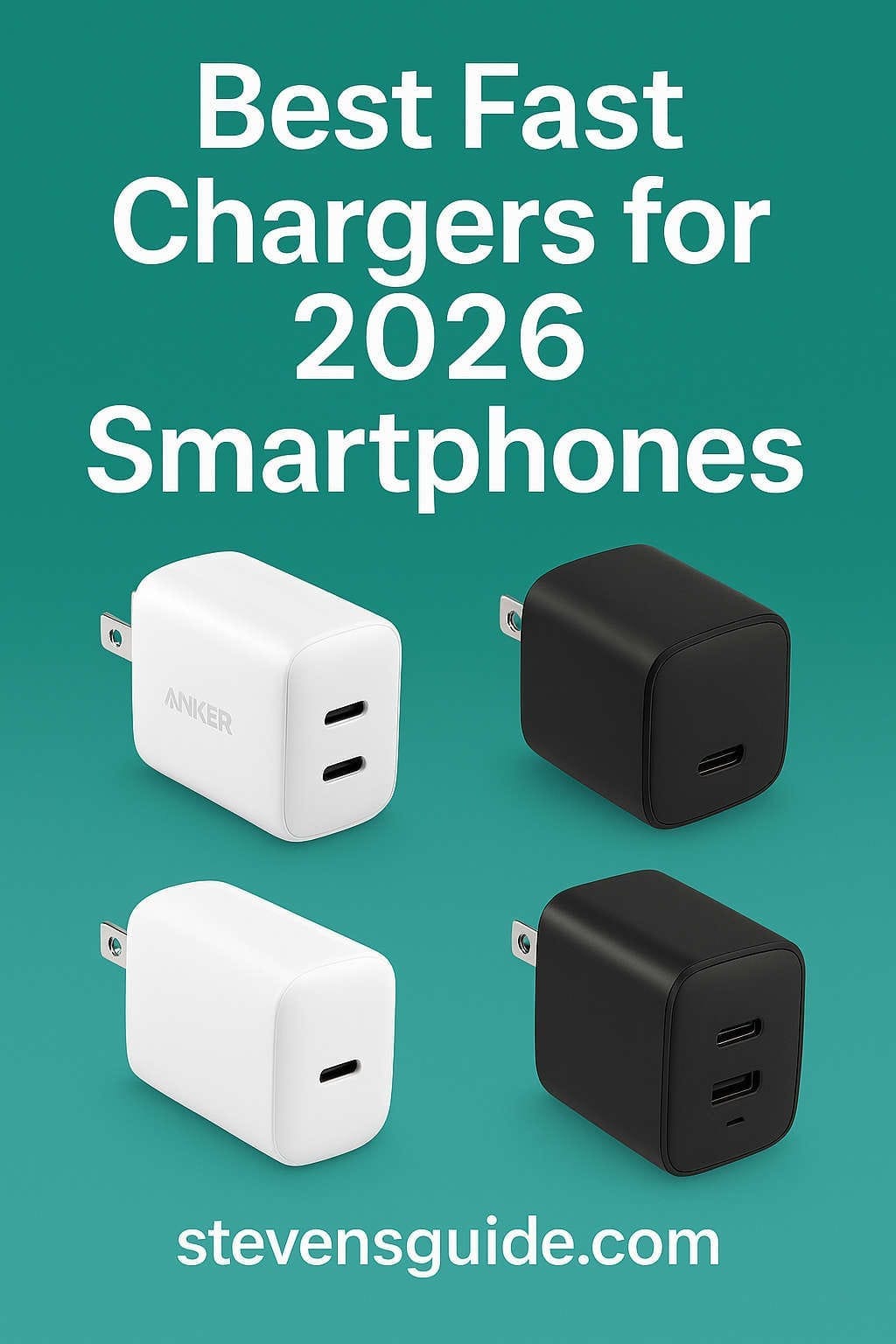
If portability is your priority, the Anker Nano 45W stands out as the perfect minimalist solution. Measuring smaller than many older low-power chargers, it squeezes an impressive level of speed into its tiny body. The Nano line proves that you no longer need to compromise between size and performance.
Despite being ultra-small, it still provides enough power to fast charge nearly all smartphones and even handle lightweight tablets. Travelers and daily commuters appreciate it because it slips easily into a pocket or small pouch without adding weight. If you want the smallest fast charger that still performs like a full-sized power adapter, this is the one.
Apple’s own 35W Dual USB-C charger continues to be an excellent companion for users who live inside the Apple ecosystem. It’s a clean, reliable, and efficient adapter that supports fast charging on modern iPhones and iPads, while also allowing two devices to charge at once without complications.
Though not the fastest solution on the market, Apple’s charger excels at stability and long-term safety. For users who prefer original accessories and want peace of mind that everything will just work right out of the box, this charger is a dependable choice. It’s also particularly useful for people who often charge an iPhone and AirPods together or for someone who wants a compact dual-port charger next to their nightstand.
Samsung remains consistent with its proprietary fast-charging approach, and its official 45W Super Fast Charger is the accessory that brings out the full charging potential of the Galaxy S-series and Note-series models. Samsung’s fast charging relies heavily on PPS, and official chargers still provide the best compatibility and the fastest supported speeds.
For users who want guaranteed support for “Super Fast Charging 2.0,” sticking with Samsung’s own adapter provides the most seamless experience. It is especially beneficial for large-battery devices like the Galaxy S Ultra series.
In the budget segment, Baseus repeatedly outperforms expectations by delivering real fast-charging wattage, solid build quality, and GaN efficiency at an affordable price. The Baseus 65W GaN2 charger is particularly popular because it includes multiple ports and provides enough power to keep a laptop running while still fast-charging a phone.
It’s cost-effective, compact, and compatible with major smartphone brands including Apple, Samsung, Google, OnePlus, and Xiaomi. Baseus chargers often deliver performance comparable to more premium brands without the higher price tag, making them perfect for shoppers who want value without compromise.
As USB Power Delivery continues to evolve, PD 3.1 chargers offering 140 to 240 watts of power have started becoming more mainstream. These aren’t just for charging smartphones—they are designed for users who want one power brick to handle everything from smartphones to high-performance laptops.
These chargers are ideal for tech enthusiasts, remote workers, or anyone who carries multiple devices and prefers to avoid bulky laptop adapters. While the smartphone itself won’t require this much power, the advantage comes from convenience and future-proofing. Your charger becomes a universal solution for all your electronics, especially if you also own a USB-C laptop.
Choosing the Right Charger for Your Smartphone in 2026
Because fast charging varies across smartphones, choosing a charger based solely on wattage can lead to disappointment. The key is understanding what your specific phone supports.
iPhones, for example, work best with chargers in the 20–35W range, though they can still charge well with higher-output chargers. What truly matters is PD support, which determines how quickly they can jump to 50 percent battery in roughly half an hour.
Samsung users should pay attention to PPS, especially if they own Ultra models. Without PPS, the phone will default to slower charging speeds. A reputable charger that explicitly supports PPS ensures you unlock Samsung’s higher-level fast charging standards.
Google Pixel phones also prefer PD and PPS combinations, and many of their newest models rely heavily on adaptive charging curves, meaning the phone modulates charging behavior to protect the battery. A high-quality charger that offers consistent power delivery guarantees a smoother charging curve and lower heat buildup.
If you are an owner of a gaming phone or a flagship Android device from brands like Xiaomi, Oppo, or OnePlus, your device may support extremely high-speed charging modes that use proprietary technology. These modes often require the original charger and cable. However, for everyday travel and general fast charging, a strong PD/PPS charger works perfectly fine and is safer for long-term battery health.
The Importance of High-Quality Cables in 2026
A great fast charger is incomplete without the right cable. Many users blame their charger for slow performance when, in reality, the cable is the limiting factor. In 2026, cables are classified by their power ratings and data capabilities.
If you plan to use a PD 3.1 charger, especially one above 100 watts, you need a USB-C cable rated for 240 watts or known as an EPR cable. These cables handle higher voltage levels safely and ensure stable current flow. A basic USB-C cable may still charge your phone, but it simply won’t unlock the full potential of a fast charger.
For iPhone users, a high-quality USB-C to USB-C cable rated for fast charging is enough. Samsung and other Android users should look for cables that explicitly mention support for PPS and high-watt charging. Quality cables reduce heat, maintain charging efficiency, and prolong battery health.
Safety Features You Should Never Ignore
With so many fast chargers flooding the market, safety becomes a top priority. Reputable chargers protect your phone with built-in safeguards like temperature control, short-circuit protection, over-current protection, and real-time voltage regulation. Cheap or counterfeit chargers often skip these safety components, which can result in overheating, battery damage, or worse.
In 2026, premium chargers also include smart power distribution that adjusts output depending on whether you are charging one device or multiple simultaneously. This prevents overload situations and helps maintain optimal battery health for all connected devices.
The safest option is always choosing chargers from recognized brands with strong customer feedback, quality assurance, and proven longevity. Investing in a high-quality charger means peace of mind and better long-term performance for your device.
Practical Recommendations for Different Users
The “best” charger depends heavily on your lifestyle. What suits a traveler might not suit someone who works at a desk all day. A few common user profiles help illustrate what charger might fit your routine.
People who travel frequently usually prefer compact chargers with multiple ports. A lightweight GaN charger like the UGREEN Nexode 100W provides the flexibility to charge a phone, earbuds, and a laptop at the airport without carrying multiple adapters. Its compact shape and foldable prongs make it comfortable to throw into a backpack or coat pocket.
Office workers or remote professionals may benefit from larger, desktop-style PD 3.1 chargers. These allow you to plug in everything—from laptops to monitors to phones—directly onto the desk without the inconvenience of separate power bricks.
Minimalists who prefer simplicity gravitate toward ultra-compact chargers like the Anker Nano series, which keeps everything small and clutter-free without sacrificing speed.
Apple users who prefer seamless compatibility enjoy the Apple 35W Dual USB-C charger because of its predictable performance and stable charging behavior.
Android enthusiasts or power users running phones with large batteries appreciate official chargers like Samsung’s 45W adapter, which delivers the fastest supported speeds.
Budget-conscious shoppers who prioritize performance without high prices often choose Baseus, as these chargers offer an excellent mix of power and affordability.
How Charging Speed Impacts Battery Health in 2026
One of the biggest concerns among smartphone users is whether fast charging damages batteries. Modern fast-charging technologies are more advanced than ever, and 2026 smartphones include sophisticated battery management systems that regulate heat, voltage, and current. Fast chargers today rarely harm batteries when used correctly.
The key is heat control. Phones automatically slow charging speeds when the battery gets too warm. High-quality chargers use intelligent power delivery to minimize heat spikes, which means they are far safer for your phone in the long run.
Moderate use of fast charging is perfectly fine. Most experts agree that occasional bursts of fast charging are normal and safe. The only risky scenario is using cheap, uncertified chargers that lack proper thermal regulation and safety mechanisms.
A good fast charger today is designed to complement your battery, not stress it.
Final Thoughts: The Perfect Fast Charger for 2026
The market for fast chargers in 2026 is more advanced and more competitive than ever. The ideal charger for you depends on your device, your daily habits, and whether you value portability, multi-device convenience, or future-proof power.
If you want an all-around reliable and powerful charger that works beautifully across brands, the UGREEN Nexode 100W GaN charger is one of the best choices available. For heavy travelers or minimalists valuing compactness, the Anker Nano 45W provides exceptional performance in the smallest possible size. Apple users find steady compatibility with the Apple 35W Dual USB-C charger, while Samsung owners get maximum speed with the official Samsung 45W Super Fast Charger. Budget shoppers gain excellent value through the Baseus 65W GaN2 charger, and power users who need a single adapter for both phones and laptops benefit from PD 3.1 chargers offering 140 to 240 watts.
No matter which category you fall into, upgrading to a high-quality fast charger this year is one of the best decisions you can make for your phone’s convenience, longevity, and safety. With the right charger, your smartphone charges faster, stays cooler, and performs better—giving you the confidence to stay connected without being tied down to a power outlet.