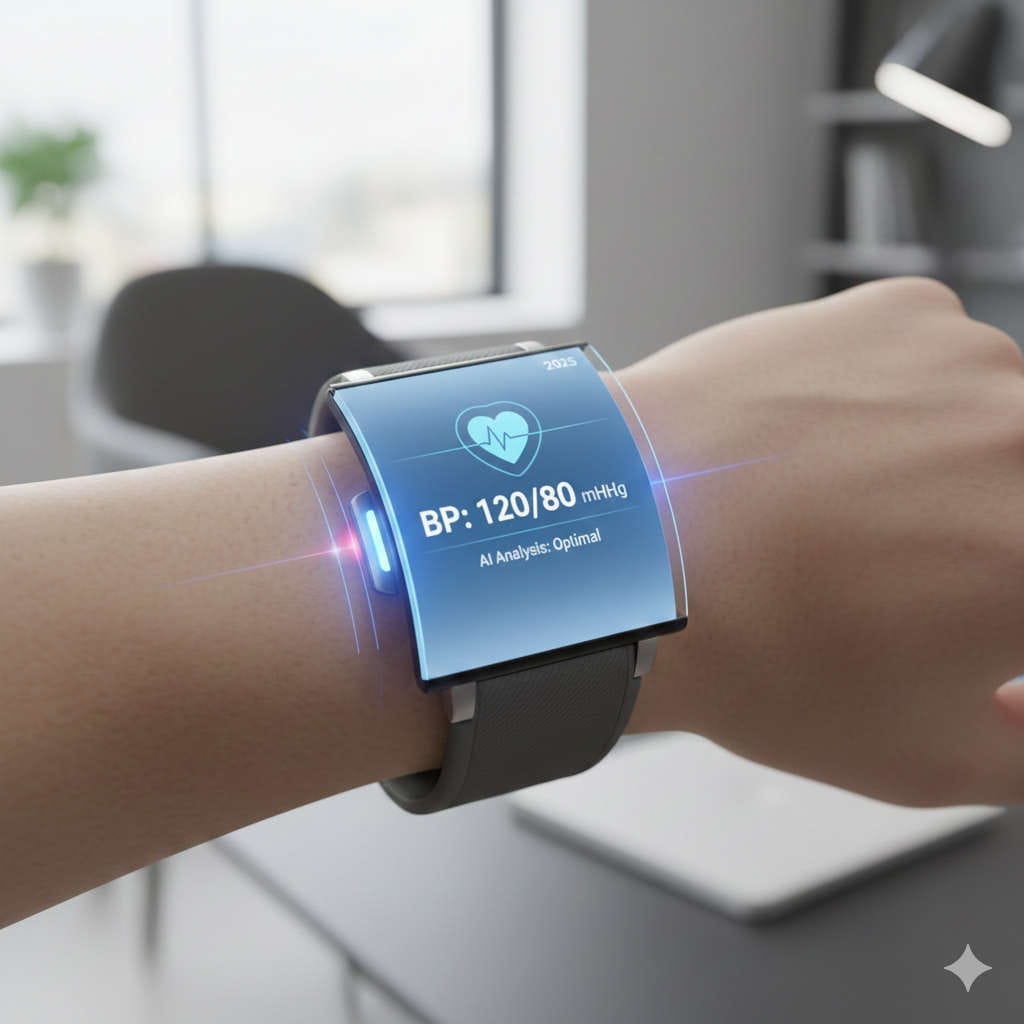
Blood pressure monitoring has become one of the most important features people look for in modern health wearables. With hypertension affecting hundreds of millions worldwide, the demand for continuous, painless, cuff-free blood pressure insights has skyrocketed. Until recently, the only reliable option was a traditional cuff that squeezed the arm. But by 2026, artificial intelligence, optical sensors, and advanced signal-processing technologies have matured enough to bring credible, non-invasive blood pressure monitoring to your wrist.
Still, this technology is not magic. Some devices offer clinical-grade accuracy, others provide health trends, and some are better suited for athletes rather than individuals who need medical insights. That’s why choosing the right AI smartwatch for blood pressure requires understanding how the technology works, what each model can and cannot do, and how to use it safely.
This guide walks you through the best AI smartwatches for non-invasive blood pressure monitoring in 2026, how they differ, which ones are trustworthy, and how to pick the perfect wearable for your lifestyle and health needs.
Why Non-Invasive Blood Pressure Monitoring Matters in 2026
Hypertension is often called the “silent killer” because it rarely shows symptoms until damage is already underway. As patients and physicians shift toward preventive care and early detection, the ability to monitor blood pressure effortlessly—without cuffs, appointments, or guesswork—becomes invaluable.
Continuous or daily at-a-glance blood pressure information helps:
Detect early warning signs of hypertension
Track how lifestyle changes or medications impact health
Reveal patterns such as nocturnal hypertension or stress-induced spikes
Improve adherence to long-term health goals
Support remote health monitoring for chronic patients
In 2026, many AI-driven watches can estimate blood pressure using optical sensors and intelligent models trained on large datasets. A few even achieved medical clearances in major markets, reinforcing their credibility.
However, non-invasive blood pressure tools are not all equal. Some watches provide trends and estimations, while others are engineered to deliver clinically reliable readings.
How AI Smartwatches Measure Blood Pressure Without a Cuff
To understand how to choose the right device, it helps to know how these watches actually estimate blood pressure.
Optical Sensors (PPG)
The foundation of cuffless measurement is photoplethysmography (PPG). This technology uses green, red, or infrared LEDs to shine light into the skin and detect blood volume changes. These tiny pulsations are the basis of heart rate, heart rate variability, oxygen saturation—and now blood pressure estimation.
Pulse Transit Time (PTT) and Pulse Arrival Time (PAT)
Some devices combine optical sensors with electrical heart signals or motion sensors to determine how long it takes for a pulse wave to travel through the arteries. These timing differences correlate with arterial stiffness, which influences blood pressure.
Machine Learning and Adaptive AI Models
AI fills in the gaps by analyzing:
Pulse wave shape
Skin properties
Heart rate
Motion artifacts
Demographic factors
Calibration inputs
The models continuously refine their predictions based on real-world data, learning your unique arterial patterns and improving accuracy over time.
Why AI Matters
AI is not just a buzzword here—it’s essential. Without advanced algorithms, optical signals alone would be too noisy or inconsistent. AI algorithms help remove motion interference, compensate for sensor limitations, and interpret subtle physiological changes.
Still, even with AI, cuffless tech works best for trends rather than instant clinical decisions—unless you’re using a hybrid or cuff-based wearable.
What Makes a Smartwatch Reliable for Blood Pressure Monitoring?
With so many watches claiming BP capabilities, knowing what actually matters can save you from disappointment (or worse, inaccurate readings). Key factors to consider include:
1. Scientific Validation
Look for evidence such as independent studies, regulatory approvals, or validations by recognized medical bodies. True blood pressure monitoring requires rigorous testing across different populations, ages, skin tones, and physiological conditions.
2. Calibration Requirements
Some watches need periodic calibration with a traditional cuff, while a few operate without any calibration at all. Calibration generally boosts accuracy but adds an extra step.
3. Trend vs. Single-Reading Accuracy
Not all devices deliver the same thing:
Trend devices monitor changes over time
Spot-check devices provide single readings
Hybrid or cuff-equipped devices offer medical-grade accuracy
Understanding which type you need is critical.
4. Comfort and Wearability
Long-term monitoring requires a comfortable strap, good battery life, and reliability during daily movement.
5. Data Transparency
Quality devices provide easy-to-read charts, histories, and export options so your clinician can interpret your blood pressure trends.
The Top AI Smartwatches for Non-Invasive Blood Pressure Monitoring in 2026
After examining the market, reviewing real-world performance, technology capabilities, and health-tracking ecosystems, these are the leading contenders of 2026.
Best For: Reliable hypertension screening and polished health insights
Apple continues to dominate the health-wearable market with its seamless ecosystem, high-quality sensors, and advanced AI analytics. By 2026, the Apple Watch offers a refined hypertension screening tool that passively analyzes long-term blood pressure trends. Although it doesn’t replace a clinical cuff, it provides one of the most accurate and consumer-friendly screening experiences on the market.
What It Offers
Passive hypertension detection based on long-term optical data patterns
Advanced signal-processing that minimizes noise
Sleep-integrated cardiovascular monitoring
A rich ecosystem of heart-related metrics including ECG, HRV, and VO₂ max
Excellent user interface and clinician-friendly data sharing
Why It’s a Top Pick
Apple’s strength lies in combining hardware excellence with powerful AI—an advantage no other brand matches at scale. Everything works effortlessly: notifications are clear, trends are easy to interpret, and the watch encourages actionable habit-forming behavior.
This is the smartwatch for users who want credible hypertension insights without sacrificing design, comfort, or smart features.
Aktiia 2.0 Continuous BP Bracelet
Best For: 24/7 blood pressure trend monitoring without any cuffs
Aktiia stands out as one of the most scientifically focused companies in cuffless BP monitoring. Their 2026 model is designed specifically for continuous, automatic blood pressure tracking. Unlike smartwatches that provide occasional BP readings, Aktiia collects data day and night, creating a detailed map of your cardiovascular patterns.
Key Advantages
Continuous measurement throughout day and night
No need for manual readings
Focused on long-term cardiovascular trends
Uses advanced optical wave analysis unique to the device
What Makes Aktiia Special
This device doesn’t try to be a smartwatch—it specializes in one thing: blood pressure. Because of this focus, it outperforms most wrist-worn competitors at trend accuracy and long-term pattern analysis. It’s ideal for people managing hypertension or those who want medical-grade insights without bulky cuffs or constant input.
Omron HeartGuide and HeartGuide 2
Best For: Users who need clinically accurate readings without a traditional cuff
Omron’s HeartGuide is the most unique product on the list because it includes a miniature inflatable cuff inside the wristband. While it looks like a large watch, it operates using the same oscillometric method as a doctor’s BP cuff. The updated HeartGuide 2 released in 2026 refines the design with improved comfort and faster measurements.
Why It’s Still the Accuracy King
Uses the same technology as arm cuffs
Offers clinically reliable systolic and diastolic readings
Perfect for individuals who need trustworthy spot measurements
Not dependent on AI predictions alone
Trade-Offs
It’s bulkier than a traditional smartwatch and not made for fashionable users, but its accuracy remains unmatched for a wrist-worn device. If blood pressure monitoring is your top priority, this is still one of the best investments you can make.
Best For: Athletes and health-focused users who want BP context and recovery insights
WHOOP’s MG model focuses on performance optimization first, but its AI-based blood pressure insights have become an important feature for athletes. Instead of giving exact BP readings, WHOOP provides BP ranges and interpretations tied to sleep, strain, recovery, and cardiovascular load.
Where WHOOP Shines
Exceptional sleep and recovery analytics
BP interpreted within overall physiological context
AI models that improve with long-term user data
Ideal for coaching, training, and lifestyle optimization
Good to Know
WHOOP is not intended for diagnosing hypertension, but its insights can highlight patterns athletes may want to verify with a cuff or physician. It’s a great option for users who value health and performance equally.
Best For: Android users who want integrated wrist-based BP monitoring
Samsung has steadily improved its blood pressure monitoring capabilities and, by 2026, offers regionally approved BP measurement tools that rely on PPG sensors and periodic calibration with a cuff. These watches deliver a high-quality health experience with strong analytics, although availability varies by country.
Highlights
Cuff-calibrated BP measurement system
Strong Android ecosystem integration
Advanced sleep, stress, and body composition analytics
Sleek design and excellent battery life
Ideal User
Anyone invested in Android—especially Samsung phone owners—who wants a balanced smartwatch with reliable health features.
How to Use a Non-Invasive BP Smartwatch Correctly
To get the most accurate and meaningful readings, you need to follow a few best practices.
1. If Calibration Is Required, Don’t Skip It
Many cuffless systems need an initial cuff measurement to calibrate their AI. Skipping this step leads to inaccurate results.
2. Take Readings in a Consistent Position
Sit upright, rest your arm at heart level, avoid talking, and stay still. Movement can skew optical signals significantly.
3. Focus on Trends, Not Single Numbers
Even the best AI systems are more reliable at spotting changes rather than delivering perfect one-time readings.
4. Share Data With a Doctor
A week or month of trend data is far more valuable than a few isolated readings.
5. Use Cuff Readings for Medical Decisions
If you receive a hypertension alert or feel unwell, confirm with a validated arm cuff.
Which AI Smartwatch Should You Choose in 2026?
Here’s a personalized breakdown:
Choose Apple Watch if…
You want polished, passive hypertension screening
You prefer a sleek smartwatch with a large app ecosystem
You value data sharing and seamless device integration
Choose Aktiia if…
You want 24/7 BP trends with minimal effort
You are tracking hypertension or medication responses
You prefer a lightweight bracelet over a full smartwatch
Choose Omron HeartGuide if…
You need the most accurate cuffless measurement available
You want reliable single readings similar to a doctor’s cuff
You don’t mind a bulkier design for clinical-level accuracy
Choose WHOOP MG if…
You are an athlete or fitness enthusiast
You want blood pressure interpreted through recovery and strain
You enjoy subscription-based performance coaching
Choose Samsung Galaxy Watch if…
You’re an Android user
You want a full smartwatch with PPG-based BP readings
You appreciate strong battery life and health analytics
The Future of Blood Pressure Wearables Beyond 2026
The next few years will push the boundaries even further. Expect:
More Accurate AI Models
Companies will use larger, more diverse datasets to reduce bias and improve accuracy across skin tones, ages, and health conditions.
Hybrid Cuff + Optical Systems
Some upcoming watches may combine periodic micro-cuff measurements with continuous optical monitoring for the best of both worlds.
Expanded Medical Approvals
As more clinical trials validate the accuracy of AI-based BP methods, more brands will pursue medical certifications.
Personalized Cardiovascular Predictions
AI may soon predict hypertension risks, medication responsiveness, and even early signs of cardiovascular disease based on wrist-collected data.
Final Thoughts
By 2026, non-invasive blood pressure monitoring has evolved from a futuristic promise to a meaningful health tool that millions rely on. Whether you want a watch that quietly screens for hypertension, a device that tracks blood pressure continuously around the clock, or a medically reliable wearable for single-read accuracy, there is now a solution tailored to your lifestyle.
The key is choosing a device aligned with your goals:
Apple Watch for seamless screening
Aktiia for continuous trends
Omron HeartGuide for clinically robust readings
WHOOP MG for performance insights
Samsung for Android-integrated health tracking
Used responsibly, these devices can transform how you understand and manage your cardiovascular health. They offer freedom from cuffs, empower you with daily insights, and help you catch potential problems early—making non-invasive BP monitoring one of the most meaningful advancements in personal health technology.